


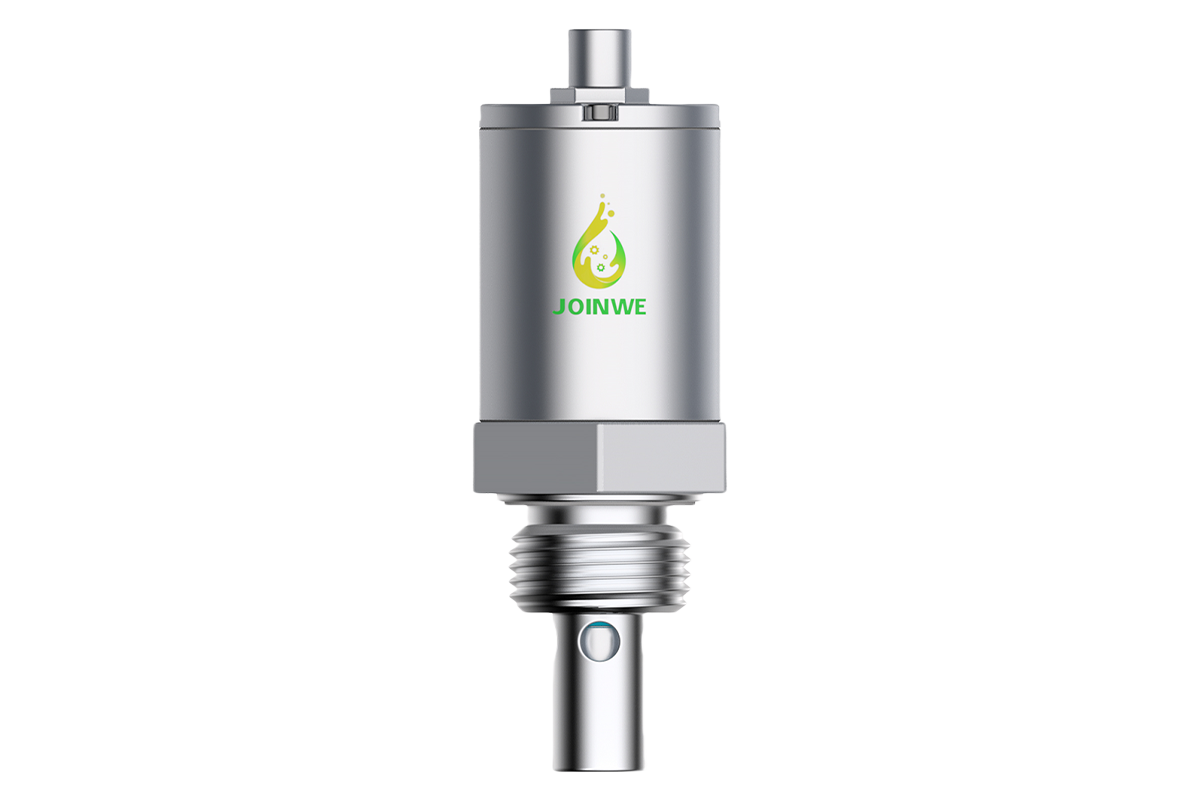
The JWF2-Q oil quality sensor is an intelligent sensor for on-line measurement of oil state changes, with its unique sensing structure and internal model. It makes it extremely sensitive to changes in oil quality, and can continuously and quickly react to changes in oil status in real time, which is stable for equipment reliable operation provides a strong guarantee. Oil quality is a comprehensive indicator of oil degradation. It reflects key factors such as acid value, wear condition, particle content, moisture, mechanical impurities, and additive breakdown. As a powerful tool for monitoring the condition of oil and its lubrication performance, direct oil quality monitoring covers a wide range of parameters and serves as a fundamental metric in oil condition analysis.
An Oil Quality Sensor is an online monitoring device used to measure the real-time condition of lubricating oil in engines, gearboxes, hydraulic systems, turbines, compressors, and industrial equipment. It continuously evaluates key oil parameters to determine whether the oil is healthy, degraded, contaminated, or nearing the end of its service life.
Unlike traditional offline sampling, an oil quality sensor provides continuous, real-time data, helping users prevent equipment failures and optimize oil change intervals.
What Does an Oil Quality Sensor Measure?
Depending on the sensor design and technology, it can monitor:
1. Dielectric Constant / Permittivity
Indicates oil aging, oxidation, additive depletion, fuel dilution, and contamination.
2. Water Content
Detects water ingress, condensation, coolant leaks, and humidity contamination.
3. Conductivity
Signals oil breakdown and contamination levels.
4. Viscosity (Certain Sensor Types)
Tracks thickening or thinning due to oxidation, overheating, or fuel dilution.
5. Temperature
Used to correct measurements and analyze thermal stress.
6. Particulates (Optional Sensors)
Some integrated systems measure metal wear particles or debris.
An Oil Quality Sensor is a powerful tool for real-time monitoring of lubrication health. By continuously tracking oil degradation, contamination, and other critical parameters, it helps prevent failures, reduce operating costs, and support predictive maintenance strategies. It is increasingly essential in modern engines, hydraulic systems, and industrial machinery.
